Investment·8 min read
Off-Plan vs Ready: Which Wins for ROI in Dubai 2026?
An honest, data-led look at off-plan versus ready property in Dubai — returns, risks, and what actually makes sense right now.
Access Group Realty·June 29, 2026
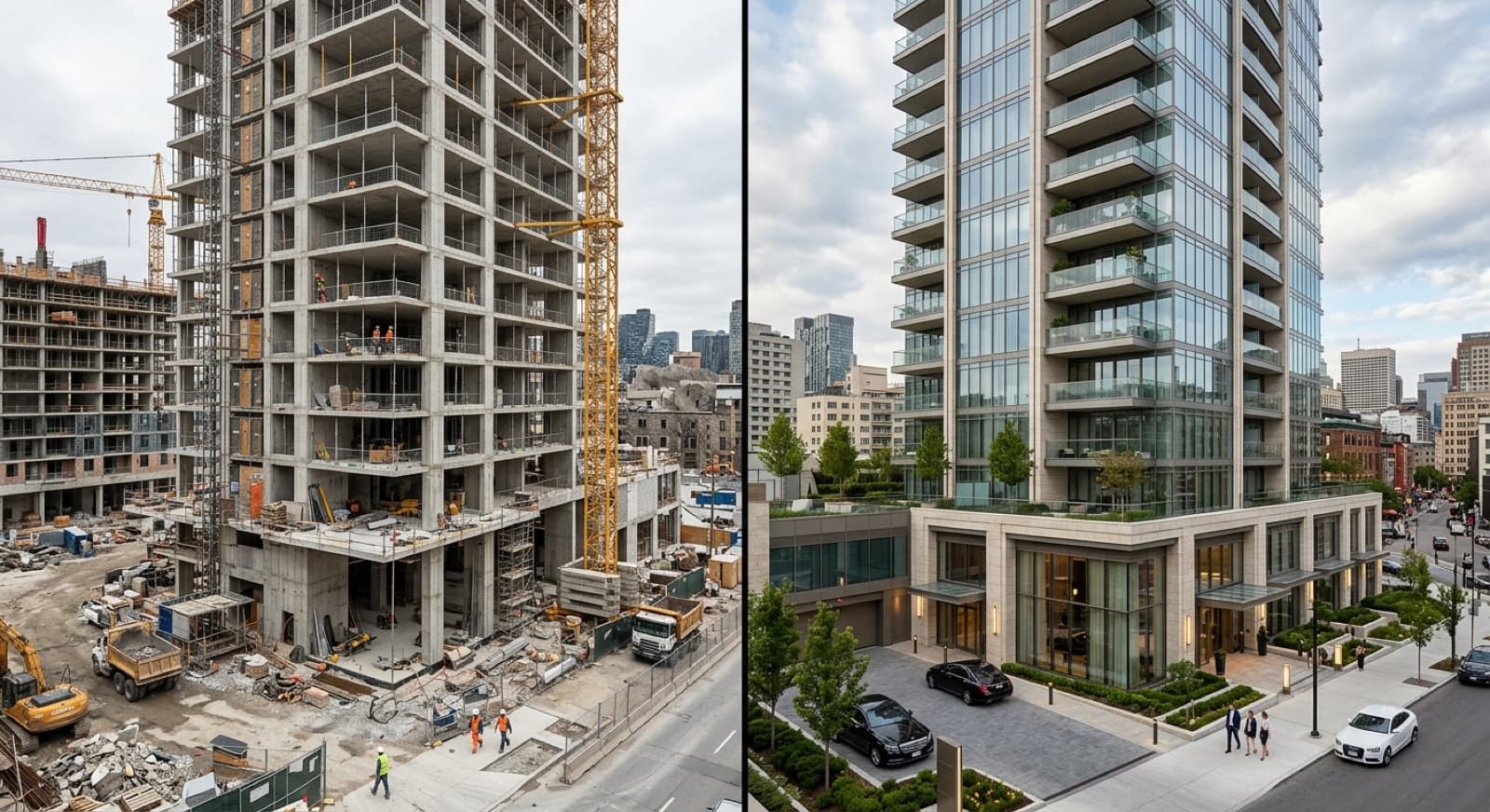
This is the question almost every Dubai property investor asks at some point. And the honest answer is: it depends on what kind of return you are after and what you are willing to wait for.
Off-plan and ready properties serve different investment strategies. Neither is universally better — but understanding the differences properly can make a meaningful difference to your actual returns.
The Case for Off-Plan
Off-plan means buying a property before it is built, directly from the developer. You are purchasing based on floor plans, a show apartment, and a developer's track record.
Entry price advantage — launch prices are typically 10% to 25% below what the same unit will trade for on the secondary market once completed. This is structural: developers price launches to move inventory quickly, and price appreciation through construction is a known feature of the Dubai market.
Payment plan leverage — Dubai developers offer payment plans that are unusually favorable by global standards. A 60/40 split (60% during construction, 40% on handover) means you are controlling an asset without having deployed the full capital. This improves your effective return on invested capital, particularly if prices rise before you complete payment.
Post-handover payment plans — some developers now offer plans where a portion of the price is paid over 2 to 3 years after you receive the keys. This means the property can be generating rental income before you have finished paying for it.
New build premium at handover — brand new properties command a rental premium over older stock, typically 5% to 15% above comparable older units in the same area.
The risks to be clear about — completion delays are real and common; a project scheduled for Q4 2025 may arrive in Q2 2026 or later. Developer default risk exists, though DLD escrow requirements have improved significantly since 2008. And the capital appreciation you are banking on is not guaranteed — if the market shifts, the completed unit may be worth less than you paid at launch.
The Case for Ready Property
Ready (or secondary market) property means buying a completed unit, usually from another owner.
Immediate rental income — from the month you close, you can generate rent. In areas like Dubai Marina, Business Bay, and JVC, gross yields on ready properties currently run between 5% and 8% annually, with no waiting period and no construction risk.
What you see is what you get — you can inspect the unit, assess the view, check build quality, and understand the service charge you will actually pay. No surprises about ceiling heights or balcony sizes.
Easier mortgage access — UAE banks lend against completed properties far more readily than off-plan. If you plan to leverage the purchase, ready property gives you more financing options.
The secondary market premium — ready properties trade above off-plan launch prices, so your capital upside is more limited. What you get instead is certainty and immediate income.
ROI Comparison: How the Numbers Actually Look
It is difficult to compare directly because the two strategies work on different timescales, but here is a simplified illustration.
Off-plan scenario — you buy at AED 1,200,000 at launch. Two years later at handover, the same unit sells for AED 1,500,000 on the secondary market. You have made AED 300,000 on capital, roughly 25%, during construction. Then from handover you earn roughly 6% annual yield on the market value.
Ready property scenario — you buy the same category of unit today at AED 1,450,000 and earn 6% yield immediately (AED 87,000 per year). Over two years you collect AED 174,000 in rent. Capital appreciation in a stable market might add another 5% to 10%.
The off-plan route wins on total return in a rising market. The ready route wins on cash flow and certainty.
What Makes Sense Right Now in 2026?
The Dubai market in 2026 has an unusually high volume of new supply coming through. Over 111,000 units are scheduled for delivery in 2026 alone — one of the largest single-year supply events in Dubai's history. This will create some softness in certain submarkets, particularly areas with the heaviest developer activity such as JVC and Business Bay.
Buyers who are selective about developer quality, location, and community fundamentals can still find strong off-plan value. Buyers who want rental income now, or who are risk-averse, should lean toward ready stock — particularly older buildings in established communities where service charges are lower and yields are proven.
The clearest answer: if you have a 3-plus year horizon and can absorb the wait, off-plan in a limited-supply area still offers the better total return potential. If you need income from year one or want to avoid construction risk entirely, buy ready.
Want this applied to your budget?
We'll turn it into a focused shortlist of live Dubai off-plan projects.