If you are buying property in Dubai and wondering whether you qualify for a Golden Visa, the short answer is: probably yes, and the process is more straightforward than most people expect.
This guide covers everything – the AED 2 million threshold, eligible property types, the step-by-step process, realistic timelines, and the questions we hear most often from buyers.
What Is the Dubai Golden Visa?
The UAE Golden Visa is a long-term residency permit that gives you the right to live, work, and study in the UAE without needing a local employer or sponsor. It was introduced in 2019 and has been expanded significantly since then.
For property investors, the key benefit is a 10-year renewable residency. That means you are not dependent on a job or a company to maintain your legal status in the country.
The AED 2 Million Rule: What Counts
To qualify as a property investor, your property or portfolio of properties must be worth at least AED 2,000,000. Here is what you need to know about how that is calculated:
Ready properties – the property must be fully registered with the Dubai Land Department (DLD) and valued at AED 2M or above. The valuation used is the DLD registered value, not what you paid.
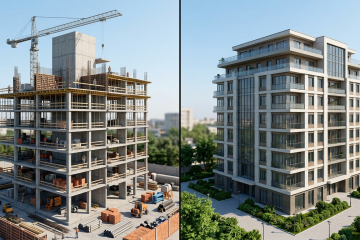
Off-plan properties – you can qualify using off-plan property registered with a RERA-approved developer. The qualifying value is the total purchase price listed on your Oqood (the initial sale contract registered with the DLD) – not the amount you have paid to date. This means you can apply as soon as the Oqood is issued, regardless of how far along your payment plan is.
Joint ownership – Joint ownership – if you own the property with a spouse or partner, each owner can apply independently, provided each person’s registered share is valued at AED 2M or more.
Mortgaged property – mortgaged properties are eligible. The full registered value counts toward the threshold, not just the equity you have built up.
Freehold zones only – the property must be located in one of Dubai’s designated freehold areas. Dubai has over 60 such zones, including Downtown Dubai, Dubai Marina, Palm Jumeirah, Business Bay, JVC, Dubai Hills Estate, and MBR City. Leasehold properties do not qualify.
Portfolio approach – you can combine multiple properties to reach the AED 2M minimum, provided all are registered under your name with the DLD.
Who Else Qualifies Under the Investor Route?
Beyond the AED 2M property threshold, other investment routes exist (company ownership, public investments), but the property route is the most commonly used and the most clearly defined.
Step-by-Step Process
Step 1 – Get a property valuation certificate Visit the DLD or use their approved valuators to get an official valuation certificate for your property. This is not the same as the purchase price or the current market estimate from an agent – it must be the DLD-issued document.
Step 2 – Obtain a title deed Your property must have a registered title deed. For off-plan purchases, the Oqood registration serves a similar purpose during the construction phase, but you will need to have paid the required amount.
Step 3 – Apply through the ICA (Federal Authority for Identity and Citizenship) The application goes through the ICA portal or can be processed in person at an Amer or Tadbeer center. You will need your passport, property documents, valuation certificate, and photographs.
Step 4 – Medical screening and Emirates ID Once initial approval is granted, you complete a medical fitness test and biometrics, then receive your Emirates ID and residence visa stamped in your passport.
Step 5 – Sponsor family members Once your visa is issued, you can sponsor your spouse, children (including sons up to age 25 if studying, daughters of any age), and one household worker.
Realistic Timelines
The process typically takes between 3 and 6 weeks from the point of having all documents ready. Delays most often occur at the valuation stage or when property documents need updating at the DLD.
If you are applying from outside the UAE, you will need to enter the country to complete the medical and biometrics. Most applicants choose to combine this with a property viewing trip.
Frequently Asked Questions
Can I use properties in other emirates? No – the 10-year Golden Visa property route applies to Dubai freehold properties only. Properties in Abu Dhabi, Sharjah, or other emirates do not qualify for this specific visa pathway, though those emirates may have their own separate residency programs.
Does the property need to be in my name only? Not necessarily. Joint ownership works, but as mentioned above, each applicant’s share must be worth AED 2M or more, or the application must be structured accordingly.
Do I need to live in the UAE to keep the visa? No – unlike some residency permits, the Golden Visa does not have a minimum stay requirement. You will not lose it for spending extended time abroad.
Can I rent out the property? Yes. There is no restriction on renting it out. Many Golden Visa holders use the property as a rental income asset while living elsewhere.
What happens when the 10 years are up? The visa is renewable, provided you still meet the qualifying criteria at renewal time. If property values have dropped and your asset no longer meets the threshold, you would need to address that before renewal.
Is the Golden Visa a path to citizenship? Not directly. UAE citizenship is separate and significantly harder to obtain. The Golden Visa is a long-term residency, not citizenship.
Can I apply with a property under construction? Yes, if you have paid at least AED 2M to the developer and have proof of payment and a valid off-plan registration (Oqood).
Why Investors Choose the Golden Visa Route
Beyond the residency itself, the Golden Visa has practical financial benefits. It allows you to open UAE bank accounts more easily, access business licenses, and in some cases reduces remittance friction when moving funds internationally.
For investors buying at the AED 2M level or above, the visa is essentially a free benefit that comes with the purchase – the cost of the visa process typically AED 6,500 to 8,500 in government fees – is minimal relative to the property value.